Wednesday, February 29, 2012

Books for February 2012

To Change the World: The Irony, Tragedy, and Possibility of Christianity in the Late Modern WorldTo Change the World: The Irony, Tragedy, and Possibility of Christianity in the Late Modern World by James Davison Hunter

My rating: 5 of 5 stars


I can’t say enough about this book. It is one of those books that I read and keep tying into everything else I see, hear, and read; that I keep telling everyone else about, and that quotes regularly come to mind that apply immediately to circumstances or ideas.


In short, Hunter considers the lofty and frequent goal of “changing culture” or, as the title states, even changing the world— both in its foundational underpinnings and rationale, and in the efforts and approaches put forth to accomplish such. As history has proven, each attempt has been found wanting, and Hunter considers why and redirects us toward an approach that is both biblical and proven. Along the way, he helpfully rethinks ideas like worldview, political power, and public witness, in each providing much assistance toward the realignment for the thoughtful Christian.


While lengthy, there isn’t a part of Hunter’s book that drags or gets tedious. Each chapter builds on the previous ones, and there is constant progress forward toward constructive ends. Every repetition serves a useful purpose and restates ideas with different emphasis or nuance. The tone and spirit of every critique is gentle, with healthy affirmation and always with more than mere critique in view.


I look forward to considering and reconsidering this material many times over, for a long time to come, and with as many people as I can.


Girl Meets God: A MemoirGirl Meets God: A Memoir by Lauren F. Winner

My rating: 4 of 5 stars


I’ve liked Lauren’s writing style in everything I’ve read from her; no less so in this book. In it, she recounts her coming to faith— twice, actually— and shares the honest struggles of a new Christian finding her way into an unfamiliar faith. With fresh and keen observations, she reminded me of how delightfully curious and how frustrating the early years of maturity in the faith can be.

Girl Meets God is an easy read, and will be enjoyable to any Christian.


Traci LordsTraci Lords by Traci Lords

My rating: 3 of 5 stars
Like many men, I have struggled with the temptation to the use of pornography, especially since it is so readily available to anyone who wants it. One of the ways that, by God’s grace, I have been able to strengthen my resistance to that temptation is by learning to understand the objectification of women that occurs in the porn industry, and by recognizing how abusive and harmful is their participation in the creation of porn.


Traci Lords’ autobiographical work, Underneath It All, is helpful in both of these ways. She offers the reader a clear, barely-varnished look at the broken circumstances that made her vulnerable to entering the porn industry, the harm and abuse she suffered while working in it, and the long-reaching aftermath of its consequences. Her story is heartbreaking, though there is a (so far) happy ending.


Be warned: while she is careful in how explicit is her description of the making of the pornography itself, there are graphic concepts described within this book. There are also photos of Traci that, while absent of nudity, are racy and provocative. Finally, there is a fair amount of coarser language, even sometimes related to sexual things. With that said, nothing is found here that isn’t milder and less coarse than the average HBO or Showtime TV show, or “R” rated movie.


The book is an interesting story, not least because it is clear from the cover and the author’s presence in more mainstream culture in recent years that she has overcome much of the brokenness that afflicted her early in her life. The writing is not bad, but far from literary in quality.


Forgotten God: Reversing Our Tragic Neglect of the Holy SpiritForgotten God: Reversing Our Tragic Neglect of the Holy Spirit by Francis Chan

My rating: 3 of 5 stars


This title fits nicely into a category I would call “Vernacular Theology” because, while it isn’t up to the level of academic or even advanced lay-level theological writing, it isn’t exactly mere “Christian Living” either.


I appreciated Francis Chan’s effort to challenge Christians toward more thorough and faithful consideration and reliance upon the Holy Spirit. In that way, it was a very strong work on a needed topic. The Holy Spirit— and our theological reflection on His presence and work in our lives— is probably one of the more woefully neglected topics in the broader evangelical tradition (apart from our Pentecostal and Charismatic brethren, at least), and certainly among Reformed or Calvinist folk.


There were times when I wasn’t 100% with Chan in his particular points, like when I felt he was being provocative for the sake of it or even throwing down a gauntlet of “if you disagree then maybe you aren’t a Christian” (though never in those words). These occasions weren’t enough to sour my overall impression, however.


Chan’s writing isn’t bad, and it is generally engaging enough. He’s not up to the level of a Nouwen, Wangerin, or Sinclair Ferguson in his ability to engross his readers in a page-turning literary feast.


I read this one as a free, borrowed title from Amazon’s Prime Kindle Lending Library, so I didn’t have any financial stake in liking it— but I did anyway.


The Facial Hair HandbookThe Facial Hair Handbook by Jack Passion

My rating: 2 of 5 stars


Chalk this one up as another of the more odd titles that I read this month!


I bought this because, after 3+ years with a full beard, I wanted some insight into better care for my beard. (Especially since moving to Arizona, I’ve noticed that the skin beneath my beard is dry and sometimes irritated.) The Amazon reviews for this book suggested that such insight might be found within.


I will say this: the author is definitely passionate about his own beard, and about what beards in general suggest about a fellow’s manliness. He’s also funny, and there are a few laugh-out-loud lines in the book. It is an entertaining read, though I say that as a beard-wearer more than as a reader.


By and large, though, I found very little help in this book for what I sought. The information offered is far too basic (though very thoroughly covering the basics) for my needs, as I already know very well how to wet-shave and how to wash and brush my hair. This book is ideal for a college kid who is in one of two circumstances: a) his dad was largely an absentee and therefore couldn’t or didn’t teach his son the basics of grooming; or b) he’s setting out to grow a beard but is too insecure to even ask friends or family for advice.


Seriously, if you’re not in one of these two situations, this is hardly a “must read”. If you’re bored and more than mildly curious about beards, though, it won’t kill you to read it.


View all my reviews

Tuesday, February 14, 2012

A Primer on Fasting

Our Session has determined that we will have a congregational day of fasting for all who feel led to participate, on Saturday, March 3rd, in anticipation of our potluck and congregational discussion on Sunday, March 4th. I wanted to take an opportunity to answer some questions and offer some guidance about this.

Why do we fast? This basic question occurs to all of us at some point. A writer named Scot McKnight defines fasting as, “a whole-body response to a grievous sacred moment.” This definition helps us understand why we fast: we are responding to something that is spiritual enough, and grievous enough, to merit such a response. We are spiritual beings, and often respond to grievous occasions in a spiritual way (prayer, for example); but we are also physical, body-dwelling creatures, and we can and should respond with our bodies as well.

On this occasion, the Session has recognized that we are in the midst of a grievous sacred moment right now—as we seek the Lord’s guidance in future directions for our congregation. We want to respond appropriately, with fasting and prayers for repentance and forgiveness, of intercession for one another and our body corporately, and for our humility and God’s glory.

Some may ask, “Should I participate?” The answer is, yes— if you believe that you should. Fasting is something that some people incorporate into their spiritual lives on a regular basis— even weekly for some. Others seldom, if ever, fast. If you have never fasted— or if it has been a long time since you did so— you might try it, keeping an open mind. You may find that it is a practice you would like to continue.

There are some people who should NOT fast because of health or medical reasons; if you aren’t sure about this, it might be worthwhile to call your doctor before you decide to fast. Some will find that fasting can become something they approach in a legalistic way, and these people should be careful about whether they should fast, and what their motives are for fasting. Some will find that their circumstances may prevent them from being able to fast on a particular day (and may want to consider fasting on another day in solidarity with the congregation). No one should feel compelled to fast if they don’t feel led to, nor should they feel judged by others if they choose not to fast.

What is involved in a fast? Strictly speaking, a fast is giving up all food for a period of time. Some people do what is called a “liquid fast” which means that they do not eat solid foods, but they still allow themselves liquids such as juices and other drinks. Another type of fast is called an “absolute fast” which is when the one fasting gives up all food and drink for the duration of the fast. In most cases, a fast involves no solid foods and no drinks but water.

Sometimes people will speak of giving up certain foods for a time— during Lent, for example (more on that next week!). This is not technically a fast, but an “abstention,” as they are simply abstaining from certain foods. This can be a good exercise, too, in a similar way to fasting. Some who are not able to fast due to medical need might find that they can participate in a group or congregational fast by abstention.

A natural question is, “How long will we fast?” Generally speaking, fasting can be shorter or longer: some may occasionally fast from a single meal, while others will fast for entire days or even longer (remember Christ’s 40 days of fasting before He began His public earthly ministry). In this case, the Session has called for a fast to start on the 3rd, with no specific instructions beyond that. You may choose whether you would fast for the entire day, for a half-day (starting after lunch, perhaps), or some other length of time. Our fast will be broken together during worship, when we take Communion together (perhaps there is no better time or way for a congregation to break fast together!), which will be followed by a potluck.

Someone once asked me, “What do I do during the fast?” This, like fasting itself, is largely up to your conscience. However, I am glad to offer some suggestions. You might spend the time you would normally take for meals in prayer, reading the Bible, or singing hymns. You may decide to calculate what you would normally spend on those meals and snacks and give that amount of money to the Deacons’ Fund at DMC, or to a charitable cause.

In this case, because the Session has called for both fasting AND prayer about a specific topic— God’s leadership for our congregation— you should spend some extra time in prayer. One “cue” that I have used in the past is that, whenever my stomach growls or I feel a hunger pang, I take that as a prompting to pray. You should pray in your own way, and as you feel led to do so.

Jesus tells of how we should NOT spend our times of fasting: flaunting it before the world. When we fast, he says, we should not do it like the hypocrites, making a big deal about it and drawing attention to ourselves (Matt. 6). Thus, if you choose to participate in this fast (and/or to fast at other times), you should be cautious that you don’t do so hypocritically or in a manner that draws attention to your fasting.

Finally, we understandably ask, “What does fasting DO?” Sometimes we feel we must “get something out of” an exercise like fasting. And truthfully, God does, at times, bless our fasting with a response of granting us something— He will answer our prayers in the manner that we asked for, or will begin (or continue) a work in our midst that represents a blessing. But (like prayer and so many other spiritual activities) we must be careful not to approach fasting with wrong motives, or to view it as some sort of special tool that will help us to get our way with God. Fasting is not a spiritual crow-bar for leveraging our desires into the will of God.

Going back to McKnight’s definition of fasting: what fasting does is to serve as an appropriate response. We don’t fast to get something; we fast to be something— or someone: specifically, a child of God. When we are grieved by our sin, by the lack of repentance in our hearts, by our neglect of the poor, by a tragedy or loss, or by any of a number of other reasons why we might be grieved, fasting is a natural and proper response for the children of God. If we get anything from it— if fasting DOES anything in these moments— then the most important thing it does is to help us to draw closer to the God who we call Father.

I hope you will search your hearts and pray about whether you would participate in the day of fasting that we have scheduled. May the Lord be with you as you do.

Monday, February 13, 2012

Congratulations again, Laura!

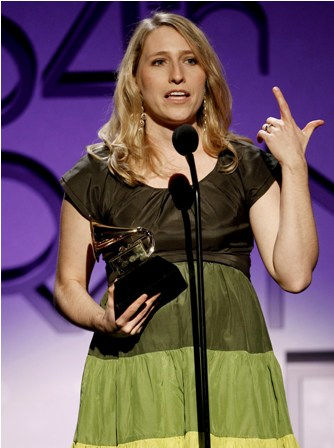
NewImageOne of my friends from college won a Grammy last night: Laura Story won the award for "Best Christian Music Song" for "Blessings."

Of my 10s of readers, long-timers may remember that I posted about Laura before: when she won a Dove Award for her song, "Indescribable", back in 2009. For the other eight or so of you, let me bring you up to speed.

Laura and I were on the same Young Life team for about a year, and we were friends from the college campus ministry where I was the music team leader (FCA). Also, Laura was in a band for whom I did a lot of photography for their CDs and promo materials. Eventually the band moved on to using a real pro for their photos, and Laura and I both moved on from Young Life to other ministries. But we kept in touch, at least a little, and it was a true delight to see her at the PCA's General Assembly a couple of years ago.

A fun story (sorry, bad pun) about Laura and her husband: one night, after one of the concerts where I did photography for the band, they and a few others (including me) went out for a bite. Laura and I were talking about relationships, and she told me she was trying to decide what to do. A guy she had seen off and on in high school wanted to date again, but she wasn't sure. My advice? Give me a chance! So she did— and eventually they got married!

(I asked her at General Assembly about that, and whether she remembered it; she said she did, and her husband, Martin, said, "dude! Thanks for my wife!")

Congratulations, Laura— may this be the first of many more recognitions of your wonderful talents.

Buy Laura's award-winning song, Blessings, here.

Monday, February 6, 2012

From Pastor Ed, 2/5/12: Why do we confess our sins every Sunday?

For those who have been worshiping as Christians for much time at all, we would have little trouble filling in the blank for this statement: "worship just wouldn't be complete without _____." Early in my ministry, a friend and fellow pastor introduced this statement to me by saying, "it wouldn't be Christian worship without a good confession of sin and assurance of pardon."

Obviously, that statement has stuck with me all these years; indeed, it was a beginning-place for my ongoing consideration of what constitutes right, healthy, biblical worship. For many, however, my friend's statement seems unreasonable, or even perhaps mistaken. Confessing our sin week by week may strike us as off-putting and even offensive. Why DO we confess our sin in worship every week?

I believe there are a number of good reasons to do so. Here I'd like to offer a brief glimpse of some of them.

We confess our sin because we can see a clear biblical pattern of confession in worship. Throughout the Bible, those who worship do so with confession of their sin readily on the tips of their tongues. As we read the Psalms, which was the hymnal and prayer book for the Old Testament church, we see that most of them contain a strong element of lament for sin. When Jesus taught His disciples to pray, He included a clear prayer of confession and request for forgiveness. Worship that is guided by the Bible, and not simply by preference, includes confession of sin.

We confess our sin because we recognize God's glory and, therefore, our sin. Every week our worship service begins with open and abundant praise to God. This is right! God is glorious and worthy of all of our praise— indeed, He is worthy of even more praise than we are able to give. If we honestly acknowledge God's glory and worthiness for praise, it should be a natural response to that to confess our own sin. The light of God's glory shines into the dark corners of our lives, and exposes who we really are.

We confess our sin because we are told, in Scripture, to approach God in worship with a humble spirit. The Psalmist wrote, "If I had cherished iniquity in my heart, the Lord would not have listened" (Psalm 66:18). Likewise James, the brother of Jesus, tells us that, "God opposes the proud, but gives grace to the humble" (James 4:6) and therefore urges Christians, "humble yourselves before the Lord, and He will exalt you" (4:10). Pride keeps us from confession of sin; humility is required for forgiveness.

We confess our sins because we have them! No one— believer or unbeliever— is without sin. Christians don't stop sinning; we simply grow in our awareness of it and honesty about it. John the apostle, writing to believers, said, "If we say we have no sin, we deceive ourselves, and the truth is not in us" (1 John 1:8). He was including himself, and all of the other believers, in this active and present-tense declaration. We have sins, and we must confront that fact— not with effort or desire to improve in our own strength, but with reliance upon God's grace, mercy, and strength.

We confess our sin because we have been promised forgiveness, assurance, and deliverance of it. Those who are believers are not only called to confession, but are promised assurance of pardon of the sins we confess. John immediately followed the verse above with this promise: "If we confess our sins, He is faithful and just to forgive our sins and to cleanse us from all unrighteousness" (1 John 1:9). Not only are promised forgiveness, but also that God Himself will work in response to our confession to give us more righteousness.

We confess our sin because we are bound together in it. Sometimes the specific confessions of sin that we use may describe particular sins that we do not directly struggle with; yet, because we are bound together in Christ, and because we are commanded to bear one another's burdens, then we confess our own participation in the sins of our brothers and sisters. This is one reason why public and corporate confession is so vital: it encourages and enforces a solidarity with one another that the Bible tells us is necessary for our individual and corporate spiritual growth.

One of my favorite writers on Christian worship described confession of sin in this way:
"…Worship must include recognition of our sin. This is difficult for our age, but without it our worship lacks integrity. It is a matter of honesty. God is offended by sin, and yet he accepts sinners… Honesty demands that when we approach God sin be confessed. Otherwise we have an uneasy conscience about it, and, even worse, we compromise the holiness of God."
(Hughes Oliphant Old, Leading in Prayer: a workbook for worship [Grand Rapids, MI: Eerdmans Publishing Co., 1995], p. 79.)

Wednesday, February 1, 2012

Sermon Texts for February

Here are the sermon texts for February 2012, for Dove Mountain Church:

2/5 — 1 Peter 1:13-21 (Holiness by Identity)
2/12 — 1 Peter 1:22-25 (The Imperishable Seed)
2/19 — 1 Peter 2:1-12 (Living as God's People)
2/26 — 1 Peter 2:13-17 (Submission, part 1: The State)

Wednesday, January 25, 2012

What it DOESN'T mean to "prepare our hearts" for the Lord's Supper [repost]

I've been using some of this, originally posted in July 2011, in my "From Pastor Ed" column in our Dove Mountain Church worship folders. Below is the entire contents.

____________________________

One of the areas where, as a pastor, I consistently notice misunderstandings is with regard to the sacraments. Really, there is misunderstanding left and right in that area. A particular part that is misunderstood, however, is what it means when church members are encouraged to "examine themselves" and/or "prepare their hearts" for the Lord's Supper.

One common(mis)perception that to prepare one's heart or examine oneself is simply to think, "hmm... now, what sins have I failed to confess to God, that I need to be sure to confess and ask forgiveness for before I can rightly take Communion?"

This is a wrong view, for several reasons. First, it implies that the barrier (or fence, if you will) between someone and communion with God is a matter of a work of their own-- in the form of a particular confession! In other words, the thing we must do to receive God's grace through Sacrament is the act of confessing. In fact, however, no work of our own, however religious, spiritual, or even biblical can or will gain us entrance to the table of God's Communion. This is a sacrament of grace, not of works; in order to obtain God's grace, we must be given it freely and mercifully.

Second, it implies a belief that our sins are not forgiven-- and therefore, we are not reconciled to God-- unless we have particularly confessed them. In fact, those who are in Christ truly have their sins forgiven before they even commit them. Our sins are known to God without our confession, their punishment has been paid by Christ on the cross, and they are wiped clean from our record, having been accorded to Christ. Receiving Communion is not contingent on our confession; it is contingent on Christ's finished work on our behalf.

Third, it implies that we are actually aware of all of our sins and able to confess them. Yet how often have I, by the maturing work of the Holy Spirit, come to realize an act-- or even a pattern-- of sin years after its commitment? You do, too. In fact, God knows the depths of our sin far more than we, and His forgiveness extends fare beyond our awareness. This is why Jack Miller so aptly stated something to the effect of, "You are more sinful than you ever dared to admit! But Christ is more gracious than you ever dared to dream!" As we mature in our faith, the cross becomes bigger and bigger-- though never big enough, in my eyes or yours, to truly account for just how gracious Christ is and has been with us.

Does this mean we shouldn't confess our sins? No-- we should confess our sins: to God, to those we've sinned against, even to one another. What it does mean is that there is not some measure of adequate confession that admits or forbids us to the Table.

Another common (mis)perceptionis that we must have sought reconciliation in every broken relationship before properly partaking in the Lord's Supper.

This is a wrong view, though it is frequently perpetuated by pastors. The appeal is made to Matthew 5:23-24:

“Therefore, if you are offering your gift at the altar and there remember that your brother has something against you, leave your gift there in front of the altar. First go and be reconciled to your brother; then come and offer your gift."


At the risk of stepping on the toes of fellow pastors, let me point out a few things about this as it applies (or doesn't) to Communion...
  • Notice that the verse begins with "therefore"-- which implies that we're missing at least a few verses if we want to gain understanding of this text. The immediate context is the two verses preceding these, which say, "You have heard that it was said to the people long ago, ‘Do not murder, and anyone who murders will be subject to judgment.’ But I tell you that anyone who is angry with his brother will be subject to judgment. Again, anyone who says to his brother, ‘Raca,’ is answerable to the Sanhedrin. But anyone who says, ‘You fool!’ will be in danger of the fire of hell." In the larger context, Jesus (in the beginning portion of the Sermon on the Mount) is teaching about how he came to fulfill the law, and challenging the religiosity and formalism of the Pharisees and the teachers of the Jewish law. In brief, these verses are not rebuking someone who is otherwise properly worshiping, but demonstrating how the so-called worship offered under these pretexts is false.
  • The Communion Table is not an altar. No sacrifice is being made there; we are not re-crucifying Christ every time we celebrate Communion. That analogy is both poor theology and pastorally deficient. The death of Christ as recognized in "remembrance" in Communion (Luke 22:19) and which is "proclaimed" in Communion (1 Corinthians 11:26) is a finished work, not one that we must re-create each Lord's Day (or once a month/quarter/whatever).
  • The Sacrament meal is not something that WE are offering! Rather, it is something offered TO us. By its very institution, Christ offered the Sacrament to His disciples; this was, as at least part of the meaning of the Supper, a replacement of the Passover feast (which was ALSO a gift of mercy and grace offered by God to His people). By this point, we should be starting to seriously question the usefulness of this text as it is sometimes applied to Communion.

Is there no use or application of this passage with regard to the Lord's Supper? Yes and no. The setting Christ describes is worship-- so really, we ought to apply this text to our whole sense of corporate worship. Insofar as the Lord's Supper is a part of that (which, of course, it is inseparable), we should apply it appropriately. Yet, orthodox theology of corporate life together as the Body also teaches us that reconciliation is only possible through Christ, which is the very nature of the covenant renewal that takes place week by week. So the application to the ordinary life of the church-- and her individual members-- is limited in its scope. (See the above contextual comments.)

As I have said, these are common-- but they are certainly MISperceptions about the Lord's Supper. In a future post, I'll address what it DOES mean to "prepare our hearts" for the Lord's Supper.

Wednesday, January 11, 2012

Christ-Centered Worship discussion #2

Our Session's second discussion of Christ-Centered Worship was this morning covering chapters 4 and 5. Once again, these are the questions I presented to the elders in advance of the discussion.

(Because the chapters were very similar in content— and my questions combined the ideas from both— the questions are not divided by chapter as they were last time.)

  • Calvin led worship in French, because he wanted to be understood. What are some ways that we order our worship "in the vernacular"? In what ways could we do better?
  • Chapell discusses how Calvin both participated in worship and led the congregation as "God's representative" (p. 43). What elements of worship are strongly participatory in our liturgy? What elements could be more so? How do/should our leaders demonstrate equal participation? How do/should our leaders (especially the pastor/preacher) demonstrate a role as God's representative?
  • Are you familiar with the "regulative principle of worship"? What does your familiarity (and agreement) with it suggest to you about what should be included in corporate worship? About what should be excluded?
  • Unlike the Roman Catholic liturgy, Calvin and Westminster put the Confession of Sin and Assurance of God's Pardoning Grace immediately in response to the call to worship and acknowledgement of God's glory— toward the beginning of the worship service. What is the function and place of the Confession of Sin and Assurance of Pardon, in your view? Why?
  • Calvin and Westminster made heavy use of Psalms sung and read. Why do you think the Psalter was so prominent in their liturgies? Why do you think the evangelical church has moved away from using the Psalms more frequently in public worship?
  • In contrast to Luther, Calvin (and Westminster) employed congregational singing frequently and heavily. How do you think song and music "fit" into worship today? What would happen if congregational song was taken out of worship entirely (a la Luther)?
  • Calvin saw the whole Bible as "preachable" (in contrast to Luther, whose preaching focus was narrowed to the New Testament). Westminster did, too, and also employed more frequent readings throughout the liturgy. Does our worship service make good use of all of Scripture? Why do you think so many worship styles/liturgies today include fewer readings than were historically common?
  • There are many individual elements of worship that are included in most or all of the liturgies we've seen so far in Chapell's book. Which ones are included in our liturgy? Which ones are missing? Which ones are placed very differently in ours than in these historic liturgies? Why do you think we have included some but left out others? Why have we placed ours where we have them?

Saturday, January 7, 2012

Sermon Texts for January, 2011

Here are my sermon texts for January at Dove Mountain Church (sorry they are a bit late!):

1/1 — Isaiah 55:7-13 (A Call)
1/8 — Isaiah 56:1-8 (Salvation for All)
1/15 — 1 Peter 1:1-2 (Strangers & Aliens)
1/22 — 1 Peter 1:3-12 (Praise for Salvation)
1/29 — 1 Peter 1:13-21 (Holiness by Identity)

Friday, January 6, 2012

Christ-Centered Worship book discussion #1

The Dove Mountain Church Session is reading Bryan Chapell's book, Christ-Centered Worship, and discussing it together. For December, we read the first three chapters and discussed them on the second Wednesday.

Below are the discussion questions that I presented to the elders prior to our discussion; feel free to read the book and make use of these.


Overarching Questions
  • In each of the various liturgies, and in our liturgy, how do the liturgical elements account for the "stranger in our midst"— those who are unfamiliar with, or unbelieving toward, the Gospel? How do the elements disregard unbelievers?
  • What do the liturgies (including ours) — and our congregation's participation in them — communicate about the various elements of worship? How can we employ different forms, styles, and/or modes of these elements to accomplish the same goals?
Chapter 1
  • What are some ways that you have seen structure communicate a clear message?
  • In what ways are we in danger of being ineffective communicators in our worship?
  • Looking at the chart in chapter 1 (surveying the different liturgical patterns), where do you see similarities in the various traditional liturgies? Where do you see differences?
  • At this point in our reading, where is our liturgy similar to the various liturgies on that chart? Where is our liturgy different from them?
Chapter 2
  • What elements of the Roman Catholic worship liturgy do you see echoes and hold-overs of, in our liturgy? What elements have you seen carried over in other congregations that you have worshipped with?


Chapter 3
  • One of Luther's goals in shaping his liturgy was to make worship a more participatory experience, in order to emphasize the communal nature of the church. What are some ways that this goal is met in our congregation's liturgy? What are some ways it could be better met?
  • Are you surprised to see how much of Luther's liturgy continues the forms of the Roman Catholic liturgy? Why or why not?

Thursday, January 5, 2012

Inconsistency and the Pro-Life position

The state of Mississippi voted last November to defeat Poposition 26, which offered an amendment to the (state) constitution that said:
“As used in this Article III of the state constitution, the term ‘person’ or ‘persons’ shall include every human being from the moment of fertilization, cloning or the functional equivalent thereof.”

The discussion surrounding this issue was wide and varied, and a number of arguments were offered against it. I won't go into the details of all of them (I'm not sure I could), but I will point to one interesting take by a Mississippi pastor, Stephen Wedgeworth: An Examination of Mississippi's Proposition 26.

What I do want to consider is something that arose as an interesting part of the discussion among Mississippians. It may not surprise you to hear that this referendum was contentious and divisive, but it might surprise you to learn that it was contentious and divisive even among those claiming a "Pro-Life" position. Popular (outgoing) Mississippi Governor Haley Barbour, for example, spoke out against it because defining life as beginning at fertilization, rather than at conception (which I presume would be defined as the point at which a fertilized ovum implants into a woman's uterus), meant that some forms of birth control might be made legally-questionable by this definition. Others acknowledged that this represented an open challenge to the ethics of some aspects of in vitro fertilization (such as unimplanted zygotes being disposed of).

My response to these is, "exactly."

Of course, this definition would have substantially restricted (if not eliminated outright) the practice of abortion in all, or nearly all, circumstances, even raising legality concerns when the mother's life is threatened by the circumstances. Indeed, I'm fairly confident that the prospect of such was precisely the motivation behind this proposed amendment.

In reality, however, those who are consistently "pro-life" should already know that questions reaching far beyond the issue of abortion need to be raised. It shouldn't take the potential passing of a legal, constitutional definition for socially-conservative thinkers to consider the ethical implications of matters of a less cut-and-dried (at least in the eyes of the so-called pro-lifers) nature.

Consider birth control. Many who claim to be "pro-life" have probably never pondered at length the implications of many forms of birth control. However, many of the oral means of birth control ("the pill") contain an abortifacient, which is to say they contain some substance that prevents a fertilized egg (aka a zygote) from implanting into the uterus.

The thinking behind oral birth control goes like this: the primary substance in the birth control medication is meant to inhibit fertility by providing an artificial hormone which prevents ovulation. Secondarily, penetration of sperm through the cervix is inhibited by decreasing the viscosity of cervical mucus. In other words, between the two, it should be very unlikely that a viable egg would form in the first place, and if it does, that it should be fertilized.

However, in the event that these two both fail to prevent fertilization— or in some cases, as an alternative secondary measure— some oral contraceptives also contain the abortifacient mentioned above. Scientists will disclaim that the secondary measures are almost unnecessary; thus, they say, "pro-lifers" should not have a problem with it. This begs the question: why include the secondary measures in the first place, then?

Such matters are part of the reason why Mississippi Proposition 26 failed; it would make the legality of such birth control measures questionable, at least. But it seems to come as a surprise to many Pro-Life folk that this question even emerged as part of the equation. (For the record: our Roman Catholic brothers and sisters have been far more consistent on this question than we protestants. In fact, it was a Roman Catholic doctor who invented the condom, believing he had found a means for birth control that was clear of these ethical puzzles— though he was castigated by the Roman Catholic church nevertheless.)

Or consider the husband and wife whose infertility prohibits them from conceiving naturally via intercourse, but whose doctors have advised them that they would be good candidates for in vitro fertilization — where the wife will receive hormone therapy to increase her production of ova, and these will be "harvested" (removed) from her, then fertilized in a petri dish with her husband's sperm. At a certain point, decisions must be made: of the 10 harvested eggs, 7 were successfully fertilized; how many should the implant into her? They recommend 4, as it is likely that 2 or 3 of them may not be able to attach properly to the uterine wall, so she would probably conceive with twins or a singleton. Even if 3 attach, though, she will then only have triplets.

But what about the ones left in the petri dish? And the one (or more) that is expected to fail to attach? Ethical puzzles abound about these. Had the Mississippi referendum passed, all of the other zygotes would be legally considered persons and would be treated accordingly, insofar as legal rights are concerned (leaving the doctors and parents legally responsible for the well-being of the rest of the zygotes).

Without the law, all we have is ethics. But a pro-life thinker should be clear about this, as well: the zygotes in the dish are still their offspring (or, at least by the most liberating definition, potential offspring), and they mustn't dismiss the implications of this. Doctors will sometimes advise that the fertilized eggs be kept and preserved, in the event that the first implantation doesn't succeed and the couple should wish to try again. But the implanting procedure is financially costly (not to mention the emotional strain that the entire process puts on them both, and the physiological challenges for the wife), and many cannot afford to ever try again. Often these zygotes are simply thrown out. (Remember, the proponents of embryonic stem-cell research advocate that these "left over" zygotes be harvested for research purposes.)

Some friends of ours actually went through this, when they faced infertility obstacles in their own family. Their solution was to go ahead and implant all of the eggs that had successfully fertilized (in their case, this was only 3) to avoid the dilemma of having to decide what to do with the rest. For our friends, only one zygote attached, and he is doing well.

As for the one or more that are implanted but do not attach: well, here the ethics is even more gray, because the same set of events occurs naturally on a regular basis. Through intercourse, a couple may actually have an egg fertilized that does NOT attach to the uterine wall, and therefore the zygote never becomes a fetus, baby, adult, and so on. We don't mourn these fertilized eggs, even though they may be people; we don't even realize that they exist. Does that mean that the artificially-fertilized, harvested-then-implanted egg is not an ethical concern? Not so fast: it's really more of a "yes" and "no" answer. Remember, that zygote wouldn't exist had the mother, father, and doctors never begun the process of in vitro. There is some responsibility for its brief life in their hands, and its brief life's end.

This is not to say that parents for whom zygotes fail to implant (whether those zygotes are naturally or artificially fertilized) are irresponsible. At the bottom line, there is the matter of God's sovereign hand upon all things, and there is a limit to the accountability that is appropriate in such circumstances. My point isn't to try to parse these ethical issues, but to point out a few things:
  • Many, if not most, Christians have never considered that their claim to being "pro-life" ever amounts to anything more than being "anti-abortion"— when, in fact, the above issues (and others) are closely related.
  • The question of life and viability is often appealed to by Christians as the irrefutable claim against pro-abortion arguments; what is clear, however, is that many of the most conservative segments of our society haven't considered this argument out to its reasonable end.
  • Christians should not wantonly or thoughtlessly embrace fertilization technology on the basis that "God loves children and families" but most be more discerning about techniques such as in vitro fertilization and the ethical implications surrounding it.
  • Likewise, Christians need to be more thoughtful about using birth control; not eliminating it altogether, necessarily, but understanding what is actually going on by its use and considering whether these things are ethically consistent with their positions.